Curating With Hootsuite

Hootsuite is one of the titans of social media management software. Hootsuite has clearly had a successful run thus far, receiving $246.9 million of funding from 11 investors in total. You don’t get the backing of major investment firms and over 10 million users of a product purely by luck. The reason I have a sudden interest? Basically it comes down to one thing…curation, which is currently a time consuming process. What do I need?

  1. Simplify the inbound and outbound data feeds I am plugged into. All I want is to spend less time monitoring and looking at social media, while still getting all the information…easy, right?
  2. Have one source for analytics related to my online presence(s).

Simplification

Currently I’m using Twitter, Medium, WordPress, and LinkedIn. After clicking around the website and looking at a few of the training courses, the first criteria can be easily satisfied.

Within Hoosuite’s web-app there is an interface that can be easily used to consolidate some of the sources I identified above. WordPress, Twitter, and LinkedIn can all be consolidated through the use of this tool. Unfortunately Medium is not supported. Three out of four isn’t too bad…

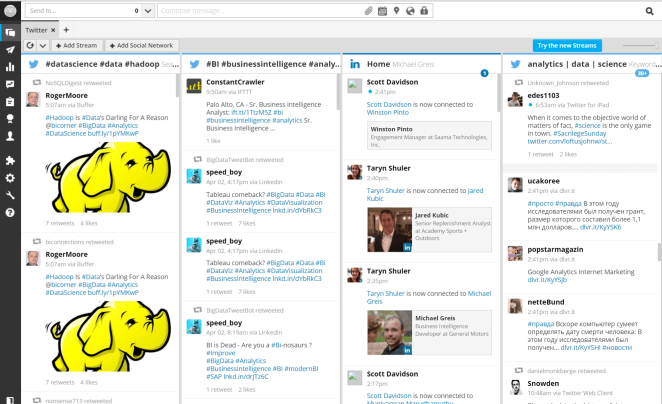
Hootsuite picture.PNGOnce the Twitter, LinkedIn, and WordPress accounts have been added to Hootsuite, all the standard streams that would be available on the separate sites are available within Hoosuite, in one page. There is also an extremely useful feature where pre-selected search terms and hashtag streams from Twitter can be added, which saves me time on typing out “data” and “BI” repeatedly. That’s a check on the first use case.

Analytics

Hootsuite comes with a few pre-built reports for Twitter, WordPress, and LinkedIn, but custom reports appear to be were the real power is. Using a custom template, a single page that combines different measures, charts and graphs from multiple webpages into one report can be made.

As a side note, it appears that there is a severe limit when using the free tier. Building one report used up all the resources I was allocated for the month…So unless all the analytics needs fit into a single report, I will have to start paying. Definitely not a plus…

Hootsuite Report

Beautiful Reports

Hootsuite had many of the capabilities I expected. Combining different social media streams, aggregating information, building visualizations, etc. seemed to be present in this tool. What I was surprised at was the complexity of the tool and getting it set up with all my accounts. Honestly, I was expecting a more user friendly use product. This may not be entirely Hootsuite’s fault…

Going forward, I’m curious what competitor products are available. Would these other products meet my use case better? A quick search reveals that the social media management space is packed full of products, many of them free. For now, Hootsuite has met one of my use cases I was originally looking to solve. Going forward I full plan to examine different tools, and choose a tool that is…freer? Also being compatible with more websites would be a plus.

Who You Should Hire

Every person is hired to perform or deliver something that you value. Considering the simplicity of this statement, why is it so hard? Why do large companies continuously hire dead weight?

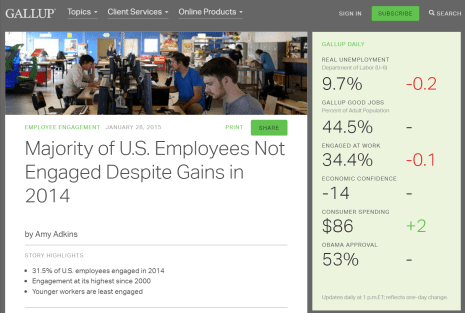
It may sound like these are baseless questions, but looking at the numbers there is a serious problem with the talent that companies are hiring. In a macro analysis study by Gallup, 68.5% of employees were found to be disengaged at work. What does this mean? Gallup State of the American Workplace.PNGThat means in the US if you manage a team of 10 people or have 9 coworkers, almost 7 of those people will be “dead weight” employees. This means that these employees are “…essentially ‘checked out’. They’re sleepwalking through their work day…” Even worse, of these 7 employees, 1-2 of these employees will be actively disengaged. These actively disengaged employees cost US business an estimated $450-$550 BILLION a year.
So how can hiring this dead weight be avoided?

The biggest indicator of how someone is going to perform is based upon two things. Personality and willingness to learn. Identifying the personality traits that are needed in the job and sussing out a potential candidate’s personality is up to the person hiring, but with a shift in thinking and process can be done more effectively.

Make a Biography

At the end of the day, hiring someone just based upon interviews is flawed. With the candidate sitting in front of you most likely trying to sell themselves, how can we get to the core of someone’s personality and goals to ensure that they align to the organization?

According to Praxent’s Tim Hamilton, adapting the methodology from Who, the goal of an interview process should be to gather as much data on a candidate as possible. The focus should be on a broader scope than the professional life or face that is put forward in an interview. By asking about the details of someone’s past and constructing a story of the overall trajectory of an individuals life, trends and characteristics can be found that reveal personality traits that a person may not be explicitly aware of (or unwilling to reveal). The more data points that are able to gleaned from the gathering of this biography, the more confident that you can be that the person who you are interviewing has the personality traits that the team needs. By the time an individual is going through the hiring process, it is reasonable to assume that the personality of the individual is relatively solidified so the usefulness of the biography should be high. If a candidate doesn’t have the right personality now, it is unlikely anyone will be able to change or mold the candidates personality once hired.

Importance of Learners

From the details presented here (and other research), the finding is that all the types of employees learning on the job had a high correlation to job performance when compared to other variables. The implication? Hiring individuals who can and want to learn is the most likely way to hire top job performers. This may seem obvious, but what is not correlated to job performance and how does that match up to the regular hiring process?

Picture of Job Performance PredictorsThe correlation of job-performance with experience is .18 in this study, and in other studies as low as .03. Meaning that one of the most highly weighted factors (experience) that is brought in to asses candidates is not the most predictive of job performance.

If an organization conducted the best interview process ever and hired the most experienced and educated individuals, the hiring would be relying on a flawed methodology that doesn’t accurately account for and weigh the real predictors of job performance.

So what can we do?

Rely on measuring what is proven to lead to high job performance in the hiring process. Don’t heavily weigh an applicants experience other than to ensure the required technical skills. Ensure that the candidate has a goal and personality fit with what is needed for the position. Create an organization comprised of learners. Construct a biography, ascertain personality traits from this, and determine whether the candidate is willing to learn based upon their personality and goals. This may not be a sure-fire methodology, but it seems to be the best way currently available to ensure that the billions of loses incurred every year due to disengaged employees will not include a contribution from your organization.

Why Storytelling is Required

Storytelling and marketing is something that seems to be undervalued by technical individuals in the information technology field. The reason why I’m talking about this? Recently at SXSW in Austin, Contently hosted a talk where Shane Snow discussed the power of storytelling. While the audience attendance was a definitely skewed towards the marketing industry, the concepts that were presented can be applied to any idea or presentation that technical people are trying to sell to customers, managers, or co-workers.

Story Continuation

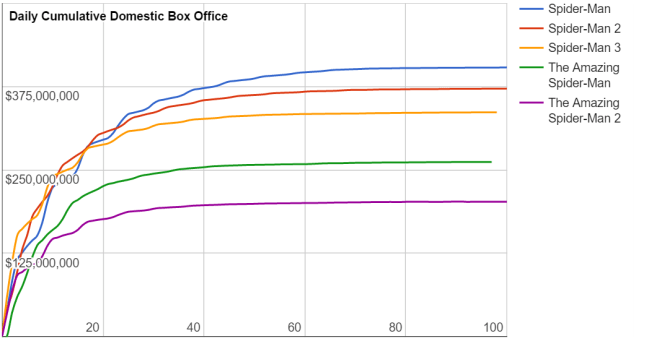
Shane, in his talk, brought up some interesting statistics that prove a powerful point. People tend to gravitate towards stories that build on existing lore and story lines. The area that was pointed to as proving his point? Movies. Shane mentioned a metric that can be used to demonstrate this. Movie revenue. The question is, does Shane’s theory prove true?Spiderman Movie Layout

If you look at the above, grabbed from The Numbers, it clearly shows a relative trend of decreasing sales revenue for Spider-Man movies. On close examination though, the biggest drop in revenue (~15%) when comparing a movie to its predecessor occurred between Spider-Man 3 and The Amazing Spider-Man…When the continuous story line from the first  three Spider-Man movies was broken.

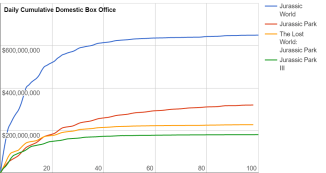
Jurrassic park - Revenue

But…doing some spot checking, also reveals the opposite to be true. Looking at Jurassic Park’s history of revenues, it appears that sequels where the story line is broken can make just as much (or much more). In order to prove out this theory, it appears that more analysis would be needed to prove this point objectively…Maybe this is an oddity with re-boots of classic series?

Regardless, in SOME cases, when movies break from a continuous narrative there appears to be increased risk of people abandoning interest in the movie/idea.

Familiarity

Additionally, Shane mentioned the power of familiarity. When traveling abroad and being around unfamiliar scents, sounds, and tastes, people tend to gravitate towards the known. The perfect example that many can relate to? Beer. Heineken is sold in over 170 countries. When someone is given the choice between a familiar brand that may even be disliked and an unfamiliar brand, people generally choose the known brand that has familiarity. Thinking about the odd concoctions one might encounter when travelling abroad, what would you rather have?

Complexity of Content

The last point that was presented? The easier that content is to read and understand, the more popular it will be. Mark Twain has books that come up at around a 5th grade reading level according to Scholastic’s system. Even the more modern classics, depending on your point of view, come up at around the same reading level. The lesson? It may make us feel good communicating with big words, but it is not the most effective way to communicate.

So What?

At the end of the day, while these ideas are interesting, what can we learn? Everyone is trying to sell stories every day. In technology/knowledge work, it’s a new design or approach to solve a problem. These strategies can be used to communicate an idea effectively and gain the support of others when combined with logical arguments. Establish a narrative that creates a vision and compelling continuous story line. Do it in a way that anyone could understand, from developers to directors, technical to non-technical. Establish a brand, identifier, or name that people can familiarize themselves with. If technical people peddled ideas that have been implemented half as well as they implement them, it would be to everyone’s advantage. Playing to people’s logic works usually…playing to logic and human nature? Couldn’t hurt.

Uses of YouTube

Well, I’ve done Facebook, so might as well move onto YouTube right? Facebook of course has video, and who will win the YouTube vs. Facebook video showdown is very much up for debate. Due to the tech of both of the platforms being at the top of their game, and the user community of YouTube being just as atrocious as the Facebook there aren’t many surface level differences. So what distinguishes YouTube from Facebook?

How to Videos:

YouTube has always been a great channel for getting to how to videos. Everything from car repairs to software programming videos are on the site. Does the same content exist on Facebook? Let’s see…

This slideshow requires JavaScript.

Comparing the two, YouTube looks much cleaner, and more to the point. I don’t see a “Trending” bar on the right side of the screen, or my Facebook friend’s post as the first result. This may be due to YouTube being owned by Google, but the search results are much cleaner and to the point.

Subscriptions:

In my Facebook post, I mentioned the low quality of content on the Facebook professional groups. With YouTube, the focus isn’t on the social aspect. When subscribing to a channel, all that is presented to the viewer is content from the channel. Due to this, the potential effect that the vapid user base of YouTube could have on getting to the content is minimized. Facebook puts the user community interactions front and center, while YouTube makes you dig to the comments section to interact with the fellow users.

This slideshow requires JavaScript.

I subscribed to three channels, The Economist, Fizzle, and TedxTalks in order to explore a range of topics applicable to my career. While the focus of each of these three channels is different, the general reasoning behind the selections is that I want resources centered around world events and trends, with Fizzle throwing in more specific information on marketing, entrepreneurship, and building a brand. Having targeted content at your fingertips is always a good thing in my book. The other big plus of YouTube? Whatever of these three channels that I navigate to on YouTube, the information is displayed efficiently and the noise present in Facebook is not present.

Establishing an Online Presence:

YouTube offers to host videos for free, so why not take advantage of this…

The other plus? My high school friends aren’t friends with me on YouTube, so this is totally green pasture. Hosting videos on YouTube seems to be yet another location that an online presence can be established that is professionally facing. Overall, YouTube is much more usable and useful for video sharing and sharing non-personal information. I much prefer the subscriptions and search engine of YouTube to Facebook’s clutter.

If you are trying to build a personal brand, or learn about…really anything I guess? YouTube is a great source. Find channels that would be helpful, subscribe, and watch the content in an incredible friendly user interface. Additionally, if the mood strikes, anyone can easily post an elevator pitch to add a more personal touch to their online presence. If I have anything technical to show, or how to videos that I’m going to do, they will be on YouTube. At this point, I’m fully content to be a watcher until I have content that will be enhanced by sharing through video.

Why is IT Always an Issue?

“IT sometimes forgets that we are a car company, not a tech company.”

I’m not quite sure how many people have heard a similar statement from clients (replace car with any product). Never before had I heard a statement that so neatly wraps up the issues and frustrations that I believe many people have with IT.

IT ComicWhat’s the core of the issue? IT is seen as a blocker and difficulty rather than an enabler. Why can’t things be simpler, or easier? Why does it take so long to do what I do now in excel with a few clicks? These are all valid questions. The easy answer? You don’t understand what we are accomplishing here and the implications of what you’re asking, delivered in an appropriate tone.
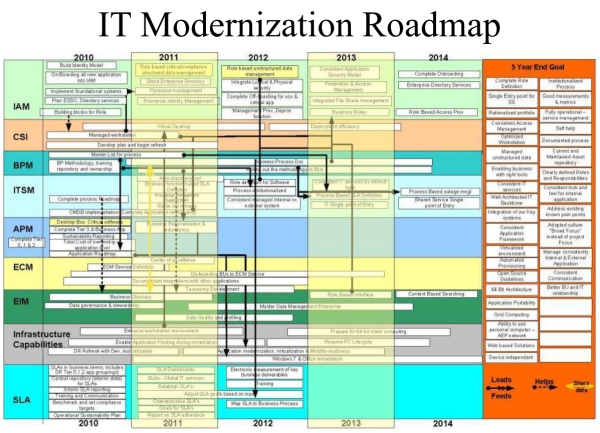
At the end of the day results are what matter. There isn’t a 100% clear solution to the issue of IT organizations and departments consistently not meeting expectations, but in order to keep clients and customers happy there is one clear action that can be done. Communicate with the client and don’t surprise them with bad news. There are countless articles on how to solve this communication divide and deliver bad news, but at the center of any project or product people delivering intangible software products need to shift the conversation from “can’t be done” to discussion of what can. At the end of the day, explaining how something can’t be delivered is not a conversation that will create a situation where any part wins. What will, is establishing realistic and deliverable goals that will assist in solving the pains of the client.

bad-powerpoint-slides

Clear communication from IT

IT may not be the business of a company, but IT should be the ones opening up new paths for a company to walk down. Not obfuscating the path to a smarter and more efficient business.


What’s Facebook Good For?

Facebook, the worlds biggest social network. Facebook’s main uses for most people include yelling at others over opinions, sharing baby pictures, and other equally important activities that include content from people and companies around the world. The big question, and one that Facebook’s currently trying to make visible, is what are the other uses of Facebook?

For Marketing

There are two main user groups of Facebook for marketing, the first being large companies and the second being individual entrepreneurs running small establishments. It is a completely free way for small businesses to establish an online presence, and for large companies it is another outlet in which they can interact with consumers. With that in mind, anyone who maintains a Facebook page for an entity other than themselves must be aware of both the positive and negative results that can occur.
Thunderbird Facebook Page.PNG
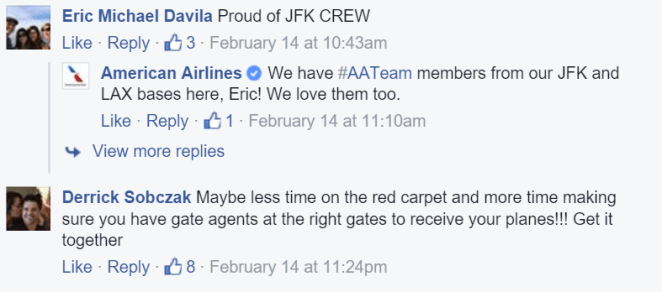
Thunderbird Coffee, a local coffee shop, has a page that is being used effectively. Thunderbird uses this to engage with customers, put a human face on their business, and promote special events which are designed to draw in customers. A small business can use Facebook as an effective and low cost way to get in direct contact with clients. For the larger companies Facebook is a risky way to generate buzz and business. Does the good word of mouth outweigh the negative word of mouth?
American Airlines

For Learning

Facebook appears to have its sights set on making Facebook a resource for professional groups and distribution of articles. While the distribution system is not yet stood up, there are a number of career orientated professional groups that are present on the site. These professional webpages are similar in look and function to LinkedIn groups, with the quality of comments and content being the differentiator between the two.
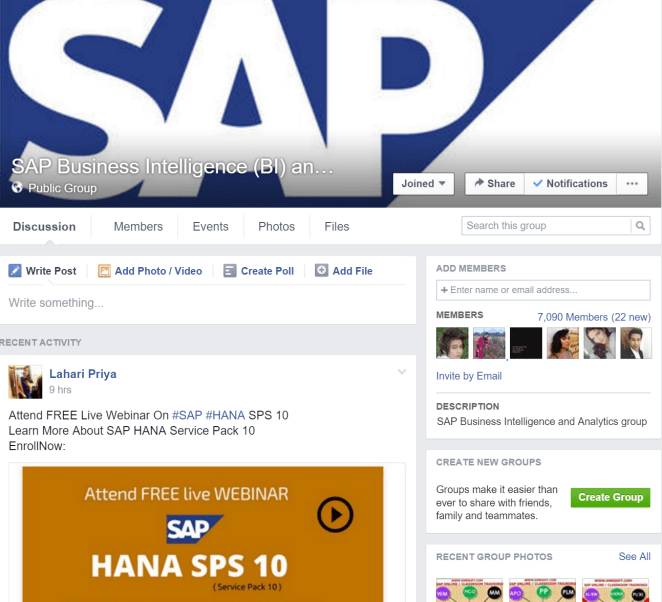
I joined the below SAP group and found many of the comments on the page were individuals plugging themselves or something that they are looking to sell. While this is just one instance of a professionally orientated group on Facebook, the intent of Facebook has traditionally not been for professional purposes. From this experience, it appears that Facebook is going to have to shift the culture of the user base if Facebook hopes to compete with LinkedIn.
Facebook Group Joined.PNG

From Publishers Point of View

Creating a page for a company or organization is extremely easy. Logging in with my personal account and creating a page for a fictitious company took no more than five minutes. This may part of the explanation as to why there are so many poor examples of pages and posts from presumably professional organizations. Unfortunately, while easy to set up, to access some of the features present in these pages, such as analytic dashboards, a page must have 30 likes/follows. Regardless, for a real company Facebook is an excellent platform for advertising and direct company to customer interaction.
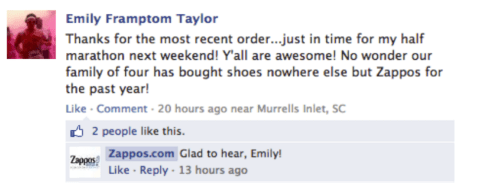
Customer Interactions Facebook
Outside of the business interactions with customers and personal non-professional interactions with friends, Facebook is limited in functionality. It will be a while before Facebook is anything more than an add platform, but Facebook definitely has the ambition and the funds to evolve into an entirely different company than it is today.

The Successes (and Issues) with Snapchat

Before I start this, full disclosure, I’m highly skeptical of the current valuations of some of the new social media companies. Of all of these, I find it hard to believe that Snapchat’s valuation is accurate at $16 billion. While it makes sense that owning the medium where people place there eyes for hours a day is worth a large value as a marketing platform, how can that high of a valuation be justified? Looking at the balance sheet of Snapchat, it appears that companies are willing to pay to get advertising in front of Snapchat users, but not nearly enough to justify the valuation. This brings me to the next question. How does a phone app that a $16 billion company was founded on look and perform?

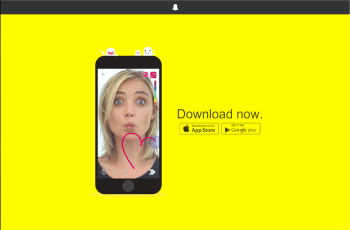
Snapchat Landing Page

In order to answer this question, I started by signing up for an account. All things considered, they do have a nice landing page and signing up was easy. Download the app, enter an email address, and get started. I created the handle mgreis25 and was instantly opening the app on my phone and inviting to connect with friends who already had Snapchat. The user interface is intuitive, with five simple buttons that are used from the main screen to interact with the app. Straight off the bat there are two main things that make this app a cool and innovative experience.

The Good:

Screenshot_2016-02-11-20-38-42.pngThe first is the medium. The fact that people are interacting almost entirely through pictures and videos makes the communications more relatable and engaging. With over 90% of people in the US having smartphones, why don’t consumers and businesses orient pictures and video into more communications? A five second video is much more illuminating than a 140 character Tweet.
The second big feature delivers more than a twitter hashtag will ever be able to. The ability of the Live Feed compilations to show an event that is currently happening and bring you into the moment to see all the craziness, or ordinariness, at certain events is truly unique. This is unlike anything that I have experienced on a social media platform to date.

The Bad:

The big issue I see with Snapchat is the fact that the content is not permanent. After viewing the Snapchat, you cannot save for viewing later. Did you like what you just saw? Well you won’t be able to view it ever again. While it makes sense considering Snapchat’s somewhat scandalous origin, I’m not a fan.

The Future:

Taking into account the humble origins of the app, the founders and creators need to realize that in order to appeal to a wider market they need to remove the auto deleting post feature. Let the people keep their Snapchats! By having the sender choose whether the receiver is allowed to keep the Snapchat, they will be able to retain the original functionality while gaining new users who want to keep the content that is shared and received.
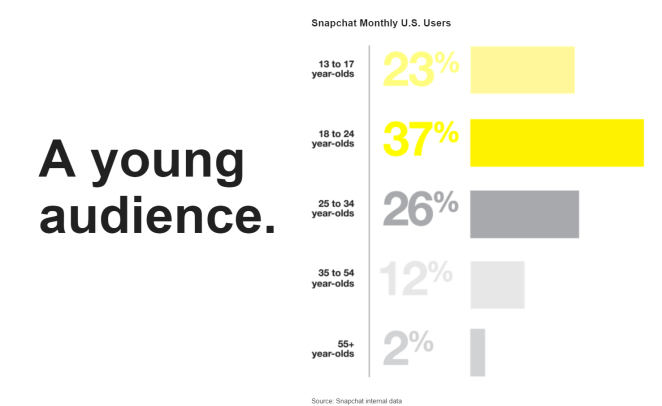
Snapchat DemographicsThe users of this app are primarily between 13-25 and majority female. There has yet to be a foot hold established in the older user demographic. The younger demographics appear to be using this app the best. I have yet to find/hear of a review of the content Screenshot_2016-02-09-18-55-26older users are posting, but older individuals are generally not too fond of Snapchat. Considering the secretive nature of Snapchat content sharing, the entities who are truly using this medium effectively as a marketing platform are the companies that are paying big money to be featured within the app underneath the Discover and Live sections. Snapchat is extremely proud of some of the successes that they have had, an example being the marketing for Fast and Furious. If a user clicks on the bottom right menu, they are lead to feeds for different live events and business entities. Once inside a corporation’s Snapchats, the user has the ability to watch a slew of videos and easily share with friends in one swipe.

Snapchat is a slick application for younger users and can be an effective marketing platform for high paying corporate customers, but I don’t think that valuation of $16 billion is reasonable. With Snapchat retaining no content from the users and only allowing for large companies to broadcast their message, the company is limited on how many paths it can take to generate revenue. Whereas Facebook allows for small businesses to advertise locally by paying on an ad-by-ad basis and gathers vast amounts of personal data, Snapchat does not allow this. At best I see the company rapidly losing value unless the business model changes drastically, becoming a shell of its former self. At worst, Snapchat may die as the user base ages and has less interesting content and time to share with one another, reducing the user base.


Why Linkedin?

The question is simple, why use Linkedin? Whether searching for a job or not, there are a few key advantages that this website offers . Having a purely professional conduit through which you can tell who exactly you are and demonstrating actual work examples certainly offers benefits when searching for opportunities.

Work Example

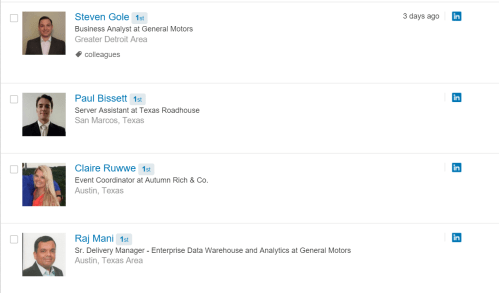
In addition to the benefits of offering the benefits of a professional face in whatever industry you may be in, Linkedin creates an area where you can instantly jack into the accomplishments of past colleagues and see what these people have been up to. When logging into Linkedin this weekend, and deciding to update my profile with the latest information, I went on a bit of a…connection spree? The two primary people who I connected with where people who I respect for their quality of work, and ability to deliver successful results. These two individuals were Steven Gole and Raj Mani who I work with at my current company.

Recent Linkedin Connections.PNG

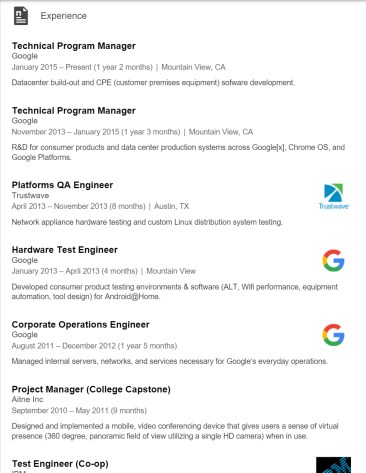
With this wealth of information about who worked where and how people’s careers have advanced, there is one big question…how do I get my dream job at a company I would love to work for? Well, thankfully Troy was here to help. The career path that Troy took mirrors similar stories to what I have heard from other managers and directors. In order to progress up the corporate ladder, especially in the tech sector requires the ability to wear many different hats. Troy progressed through Google by bouncing through different roles, mostly at Google, and as of now is a Technical Program Manager. Troy's work experienceGoogle seems to require a technical background in software or electrical engineering, or similar technical backgrounds…although Google claims that college education and grades have little bearing on their hiring.

The groups that I chose to be a part of are centered around my professional interests. The focus of these groups are around Enterprise Data Warehousing and Business Intelligence, with the most active group being Big Data and Analytics. These groups have already provided insights into what other companies are doing and where the data industry is going before the knowledge is published regularly in articles. The saying “everything that can be invented has been invented.” seems to hold true in the data warehousing industry, and hopefully I can build upon the experiences of others.

Joining the Twitter-Sphere

As you may have guessed by the title, this week I dusted off the cobwebs from my inactive Twitter account and decided to join the Twitter community. The reason for this sudden interest, aside from classwork, was the realization that the wider and more data feeds I have from non-corporate entities, the more I will be able to learn from less-published data sources. I chose to follow a slew of people and companies that are centered around my professional life and interests.

Lisa B. (@lisabriercliff)

  • Lisa is in the IT industry, near as I can tell and her feed is dominated by data analytic stories from the tech, automotive, and humanitarian sectors. Either way, from her feed, many interesting tidbits and ideas are present from which I can learn.

William McKnight (@williammcknight)

  • William won me over with the hashtags that he used in his profile. Who isn’t extremely interested in #InformationManagement #BigData #Analytics? Oh, well I guess I’m the weird ~.04% who prefer William to Kim Kardashian. William’s profile offers many good resources for lectures and info that can be leveraged by anyone from the curious, to the hardcore data enthusiasts.

Wayne Eckerson (@weckerson)

  • Eckerson, with his extensive pedigree offers insights in his twitter feed to the issues that I am confronted with daily in my work. While the others I decided to follow offer insights that are applicable around data and other topics that are of individual and professional interest, Ecker runs a Twitter buffet of pure big-business solution articles that anyone in a corporate environment can leverage.

Cindi Howson (@biscorecard)

  • This Tweeter is a VP of research for Gartner. The feed that she maintains is reflective of this, in that it is an assembly of re-Tweets that have to do with the Business Intelligence world. The Tweets are geared toward where the industry is going and what the future may be…and also some Tweets from her personal life, which is a nice addition.

UpSearchBI (@UpSearchBI)

  • I followed this one due to the fact that there is a vast lack of inspirational quotes about Business Intelligence in my life. On a more serious note though, this organization hired an excellent Tweeter. I think that this Twitter account offers some nuggets of wisdom as to why Business Intelligence professionals do what they do.

While all of these Twitter accounts are great resources, the core thing that logging in and seeing these users has taught me thus far is that there is a core community of individuals who are interested in figuring out how the world around us works. Through the use of different technologies and ideas which are present in all of these accounts, we can make many seemingly complicated problems approachable and solvable.

Each of the social media savvy individuals seem to do similar things (other than UpSearchBI’s one liners). Posting mentally stimulating, engaging articles on the way that the Business Intelligence industry is going, and how it can be leveraged. After following these individuals I have entered the Twitter-sphere by re-Tweeting a post from Lisa B. I hope to use this micro-blogging social media blogging like much of the accounts I now follow do. Posting interesting and engaging articles that I find for discussion, and hopefully find a few individuals who share my interests.


Hello and Current Online Footprint

The catalyst for the creation of this blog is my enrollment in a Social Media Marketing class at St. Edward’s University. As part of the creation of this blog, each of Professor Ramirez’s students have been asked to do an analysis of the current footprint that we each have on the internet. The primary measure of this is typing your name into Google (as we have all done at one time or another) and another search engine and seeing what comes up. So here it goes…

Blog-Assignment1_pic

Looking at the first page of results, it becomes clear that I am far from the most important and/or famous Michael Greis in the world. Which I’m not at all bitter about, as the life of a Business Intelligence Developer at GM is much more exciting than the life of an Olympian…Luckily, I am not completely overshadowed by this Olympian due to my Linkedin page.

Blog-Assignment1_pic2.PNG

The second search engine I used was Bing, which I had more of a footprint on. As a side note, this probably means that Google has a better search algorithm than Bing, as most people who search Michael Greis are probably looking for the famous one. On the Bing results page, I came up first through Facebook. If I clicked on the LinkedIn link present on the first page I was the first Michael Greis to pop-up in the Linkedin results. This seems to be good news, as Facebook and Linkedin are the primary places where I currently maintain an online presence.

These results don’t give any indication as to who I am, which I suppose would be a positive if I didn’t want to establish an online presence. If I were to interpret my current online footprint, I would label it as “every other college graduate”. I have a Facebook profile because I have always had one, and the stats back up the statement that the vast majority if people my age and with a college education have a Facebook. I have a Linkedin because at one point or another I was told that I wouldn’t get a job without a Linkedin profile, as apparently almost half  of college graduates were also told.

This then raises the question, what are my goals with this blog? After all, what’s a blog posting rate of less than 10 million a day indicate other than a dying medium? Well, my first goal is to create something that is hopefully enjoyable to read, and a place where I can post things that I find interesting for future reference and sharing with others. The next goal is to increase traffic to this blog and hopefully create the opportunity to converse with others who have similar interests to mine. My final goal is to establish an online presence where I can present myself somewhere between the stuffiness of Linkedin and the no-holds-barred cage match that is the user community of Facebook.

By the end of April I hope to have:

  • 3 followers
  • 100 visits
  • 30 unique visitors
  • 20 blog posts

Let the games begin!