Working For The Small Guys

I left my last job recently , by some rankings the 23rd largest company in the world, for a much smaller company. The general consensus from those who I talked to was that it would be good experience to have a change of pace, and many recommended a shift to a a smaller company.

With that said, I think I’ve settled in enough to pick out what I see as the advantages of working for a small company. Luckily for me, it appears that those I confided in gave me some good advice. So here we go. About four months in I’m going to give you what I see as the three best things that I’ve found working at a smaller company.

Clear Goals

Working for a smaller company, especially one the runs lean, means that the company needs to use resources as efficiently as possible.  This is evident in the fact that everyone knows what the goals of the company currently are. Instead of being lost in the back of the office doing menial work without visibility into how you are helping the company, it’s clear what problems the business is facing and how specific pieces of work fit in to accomplish the larger goal.business-commerce-work_ethic-office_job-corporate_culture-corporate_environments-hard_workers-wmi111019l

In addition, clearly outlining the goals and objectives helps to build the feeling that teams are actually working together. In my experience, large companies have many objectives and everyone has a different idea on how to solve them. This isn’t a bad thing. What is a bad thing is that in pursuing these many ideas on how to solve some overarching problem, different teams in some instances actively work against one another’s interests to solve the same problem. All this with the hope that their solution is the one that gets noticed and creates a successful career.

The Chance to Get Your Hands Dirty

The lack of bureaucracy. I love it. Instead of having to fight through multiple approval processes and layers of pointless requests to get access to data/tools, you get the ability to solve problems however you would like (and pay for the consequences).

What types of problems? Well, real problems. Instead of trying to solve the problem of moving data from one place from another, or making a banner on a homepage appear differently, you are doing things that can have direct impact. Like what? In my teams case it’s creating customer segmentation strategies, or delivering insights on data that never before has been seen.

The best part? Instead of performance being judged on how quickly a problem is solved with a pre-defined approach, it is judged on the results. Instead of the mantra “How fast did you deliver to specifications”, the mantra is “How much value did you deliver“.

Lots of Opportunity to Push the Envelope

Looking at the points above, this is fairly obvious. New ideas are easier to implement in smaller organizations. Instead of having to fight with layers of process, you are up against reality. What do I mean by that? I mean that instead of fighting people over nothing, you are fighting the limits of technology, hardware, and business processes.

The only limit is your own lack of knowledge and passion.

Inspiration vs Manipulation

A few weeks ago I was lent a copy of the book Start with Why. The ideas around the use of manipulation vs inspiration to change human behavior is one of the ideas that struck a chord with me thus far. Looking at companies today, there is a clear differentiation in the way that organizations position themselves based upon where they fall with when using manipulation vs inspiration.

Inspiration

These are the companies that get the best employees, deliver innovative solutions, and much of the time have higher margins and growth compared to competitors. How is this achieved? You guessed it. They have a great and inspiring vision of why they do what they do.

spacex mission.PNG

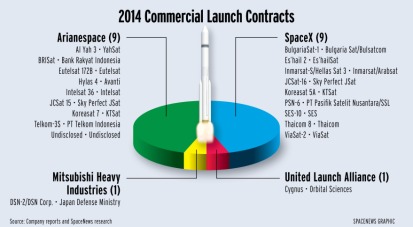
This vision and end goal above is lofty, and certainly something the people (especially rocket designers) can aspire to. Having such a vision for where the company is headed has apparently worked to Spacex’s advantage. Spacex has managed to steal significant market share from the much older Arianespace. There there must be something behind Spacex’s success.

commercial_launchers_web_1.12.151-879x485

The focus on a lofty vision of “why” an organization does what is does not only drives profits, but also clear and concise decision making and motivations for all who are involved with the company. Driving behavior towards a goal that is inspiring and internally motivated is much more effective in the long-term  compared to manipulations.

Manipulation

Price, promotions, fear, aspirations. These are the tactics that are potential changers of human behavior. When making use of these strategies, a company has most likely lost sense of why it exists. The reason for this? When a company is offering to cut price, or market to customer aspirations, there is no longer an internal motivating factor that drives the company. The company compass for decision making has been lost.

The great (or terrible depending on your perspective) example of this is General Motor’s use of promotions to drive sales. In the 1990’s General Motors, along with other US auto manufacturers relied on offering of sales incentives to retain market share when faced by an onslaught of foreign automakers. By taking this route, the US automakers effectively weakened their brands. This may have allowed the automakers to retain higher market share short-term, but it obviously didn’t help the long-term growth and profitability of the company.

Manipulations create addictions for companies that may create some short-term value, but it is at the expense of harming the organization in the long-term. The more fear, promotions, prices cuts, and aspirations a company uses to sell products the cheaper the brand perception will be.

Bottom line, knowing why a company exists provides in internal locus of control which has been proven to be a motivating force compared to the use of manipulations. There’s a reason that Apple customer’s pay more than a 20% premium compared to competitor products, and it’s due to knowing why.