
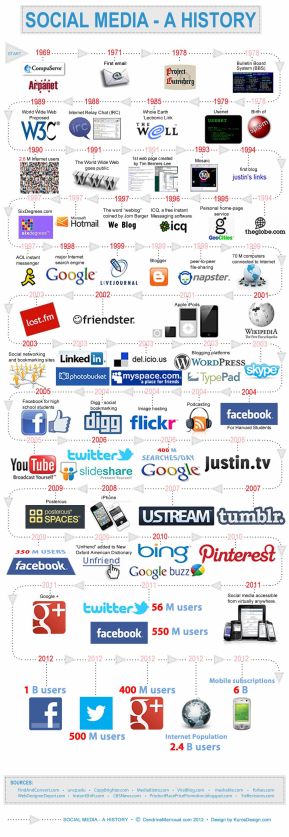
 Human history began 4,000 BCE. Social media in its modern form? Started in 1997 with the site Six Degrees. Putting these two timelines together may seem ridiculous, and admittedly is a bit, but there is a point. With social media being such a recent innovation compared to many skills still heavily used and valued by society today, such as accounting, what can social media media professionals teach us about this roughly 20 year old skill set?
I’ve had the opportunity to hear from industry experts from McGarrah Jessee, Splash Media Group LLC, and other both large and small social media marketing firms. These individuals have covered everything from creating useful branded content to establishing client relationships (and more). Although a new field, there is definitely a large group of driven individuals working towards continuously evolving and growing the usefulness of social media for business. I’m going to attempt to encapsulate a few of the important points at an extremely high level.
Biggest Applicable Advice
When interacting with people on a day to day basis, what do you prefer? A person who talks about themselves and what they have accomplished, or people who provide valuable advice and interesting conversation? Well, social media experts have realized that businesses can create a relationships with people that represent the latter through content marketing.
Content marketing seems to be a phrase that all of these social media professionals, across multiple industry and business sizes, have been repeating or hinting at. “Make it interesting” or “Make your content something people want to read”. With the deluge of ads that people see everyday, and the myriad of ways to avoid seeing these adds, advertisers now have to convince people that they want to spend time looking at ads. This same concept can be applied everywhere.
Whenever communicating with others, be genuine, interesting and most importantly create value so that people want to listen. Sticking with these pillars can go a long way.
The days of useless and noisy banner advertising are over.
Attributes of Social Media Professionals
There seem to be two types of primary skills that are needed to be successful at social media marketing. The first, an analytical ability to extrapolate data into stories and actionable items for advertising. What do I mean?
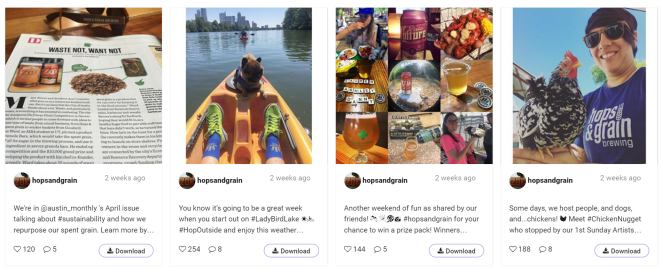
Building profiles of the target customer, measuring what works and what doesn’t, basically collecting every piece of data that is available and having the ability to develop strategies around these data points. Looking at Hops and Grain, a local brewery, the social media strategist has been able to learn from data and create a social media profile and brand that people find interesting and go out of their way to view.
Looking at the below pictures can you see a common theme? Outdoorsy, lifestyle type photos that sneak in the beer and branding into the picture in somewhat subtle ways.
The second major attribute I noticed was that all of the individuals, no matter how data driven they are, seem to be creatives. What I mean is that these professionals love coming up with new and clever ideas.
This seems to be needed due to social media being a medium that can produce widely varied results. Content must be instantaneous, in the moment, and clever, or risk becoming a Red Lobster. If a professional can’t come up with new ideas that capture people’s attention, success in social media is unlikely.
Quick Takeaways
- At the end of the day, using social media as a microphone doesn’t work.
- Be consistent online (and in life)…but really, nothing disappears once it’s online.
- Don’t feed the trolls. There are toxic followers, just like their are toxic customers. Be aware of who with and how you’re spending time on social media.
After hearing these different speakers, I don’t have plans to apply these learnings directly on pursuing a career in social media. Luckily these lessons can be applied outside of conducting advertising for a business client. I plan to apply the concepts to my career and developing a personal professional brand.

 Michael Greis